Cooling
AC repair
Most central air failures come from a short list of parts: the capacitor, contactor, refrigerant level, a clogged condensate drain or a dirty coil. A licensed technician tests each one with meters and gauges, explains what failed, and quotes the repair before doing it.
- Licensed local HVAC contractor
- Diagnosis and price before work
- Same-day appointments when a local contractor has an opening
- Free to call, no obligation
An air conditioner that runs but doesn't cool, short-cycles, or hums without starting is usually telling you which part failed. Warm air with the outdoor fan stopped often points to a failed run capacitor. Ice on the copper line usually means low airflow or low refrigerant. Water at the indoor unit is almost always the condensate drain.
Before you call, check the thermostat mode, replace a dirty filter and confirm the outdoor disconnect and breaker are on. If those are fine, shut the system off so a frozen coil can thaw and a struggling compressor isn't damaged further.
AC Repair at a glance
- Category
- Cooling
- Urgent service
- Often available, depending on local contractors
- Who does the work
- An independent, licensed HVAC contractor
- Quote
- Given after diagnosis, before work starts
Signs you need ac repair
- Warm or room-temperature air from the vents
- Ice on the refrigerant line or indoor coil
- Outdoor unit humming but the fan won't spin
- Water pooling around the furnace or air handler
- System turning on and off every few minutes
What the technician does
- 1
Confirm the symptom
The tech checks thermostat settings, filter, breakers and the condensate safety switch so a simple cause isn't missed.
- 2
Electrical and airflow tests
Capacitor, contactor and motor amperage are measured; static pressure and coil condition show whether airflow is the problem.
- 3
Refrigerant check
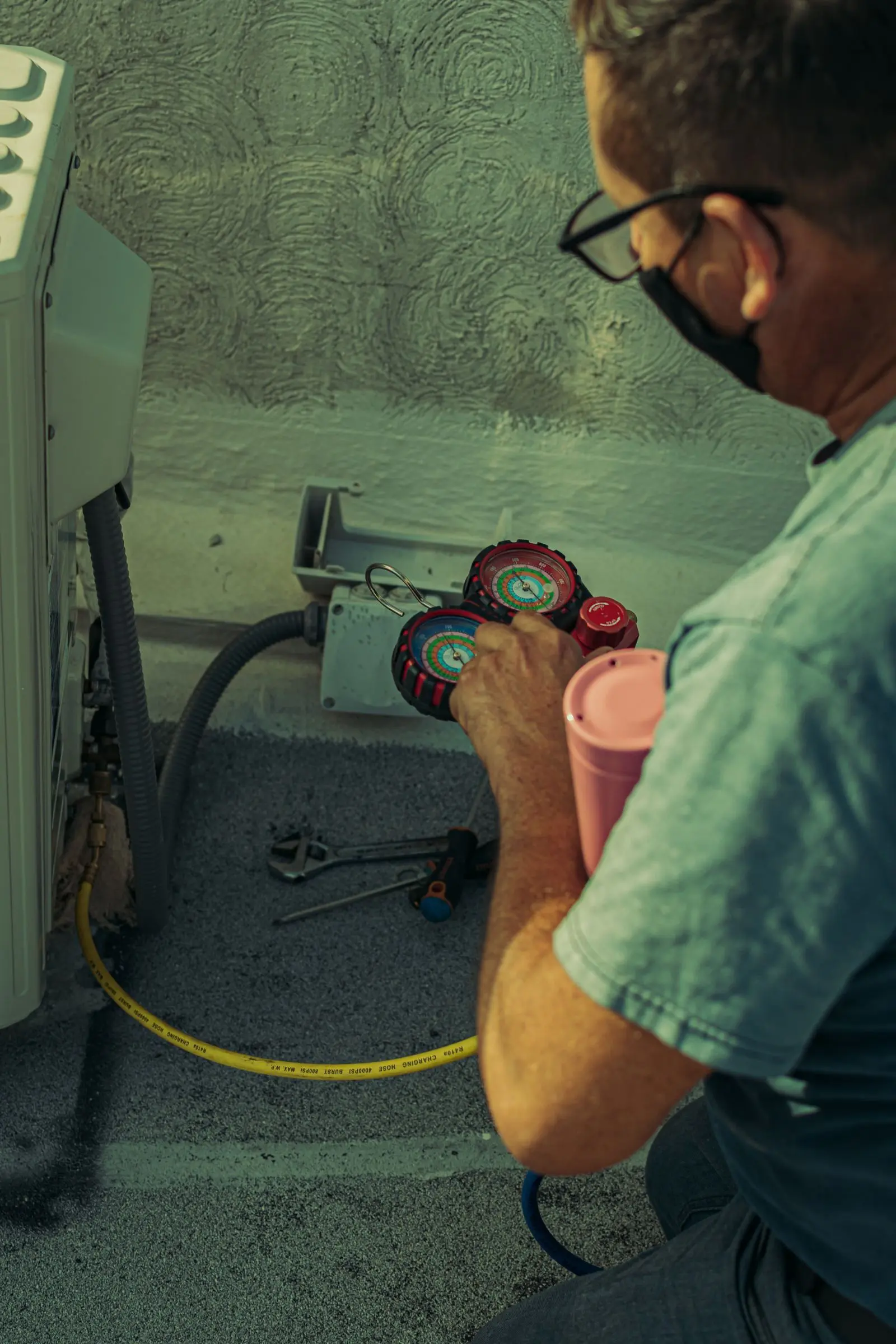
Gauges and temperature readings show if the charge is right. Low refrigerant means a leak, which should be found rather than just topped off.
- 4
Quote, then repair
You get the cause, the fix and the price before work starts, plus an honest note when the system's age makes repair a poor value.
What affects the cost
Prices are set by the contractor after diagnosis. These are the factors that move the number most:
- Which part failed (a capacitor costs far less than a compressor)
- Refrigerant type: older R-22 systems are expensive to recharge
- Whether a leak has to be located and repaired
- Access: attic, crawl space or rooftop units take longer
- After-hours or weekend scheduling
Safe to check yourself
- Replace the air filter
- Clear leaves and debris 2 feet around the outdoor unit
- Check the breaker and outdoor disconnect
- Turn the system off to let a frozen coil thaw
Leave to a pro
- Opening the electrical panel on the condenser (capacitors hold a charge)
- Adding refrigerant yourself
- Hosing down an iced coil or chipping ice off
AC Repair FAQ
Why is my AC running but not cooling?
The most common causes are a dirty filter or coil, a failed outdoor fan capacitor, or low refrigerant from a leak. If the outdoor fan isn't spinning, turn the system off to protect the compressor and call for service.
Should I repair or replace an old AC?
Replacement usually makes sense when the system is 12–15 years old, uses R-22 refrigerant, or needs a compressor or coil. A small part like a capacitor or contactor is worth repairing at almost any age.
How long does an AC repair take?
Most common repairs, such as a capacitor, contactor or drain clearing, are finished in one visit of one to two hours. Leak repairs and compressor work can take longer if parts must be ordered.
Why is there ice on my AC's copper line?
Ice usually means the indoor coil is too cold because of low airflow (a dirty filter or blocked return) or low refrigerant from a leak. Turn the system to Off with the fan on to thaw it, then have the cause found.
Why is my AC leaking water inside?
Most indoor leaks come from a clogged condensate drain or a cracked drain pan. Many systems have a float switch that shuts the AC off when the pan fills, which is why the system may stop cooling at the same time.
Why does my outdoor unit hum but the fan won't spin?
A hum with no fan movement usually points to a failed run capacitor or a seized fan motor. Turn the system off; running the compressor without the fan can overheat it.
Is it safe to keep running an AC that isn't cooling well?
Not for long. Low refrigerant, a stopped outdoor fan or an iced coil can damage the compressor, the most expensive part of the system.
Can an AC be repaired the same day?
Often, yes, when the problem is a common part like a capacitor, contactor or clogged drain that technicians carry on the truck. Compressors, coils and specialty parts may take longer to source.
Last reviewed . General information, not a diagnosis of your system.
Popular cities for ac repair
Get ac repair from a local pro
One call connects you with an independent, licensed HVAC contractor who serves your ZIP code. It's free to call, and you get a quote before any work starts.
Free · No obligation